Diesel Injector Coding Explained
Start with the correct injector profile, then distinguish bench measurements, calibration-code generation and ECU registration using an illustrated workshop workflow.
Injectune Editorial
6 min read
Updated
Diesel injector coding connects calibration information with the engine control unit, or ECU. For individually coded injectors, that information comes from testing. The code is separate from the replacement part number. Delphi explains this relationship.
Before asking how to get an injector code, identify which job you need to complete:
- Find an existing code supplied with an injector.
- Generate a replacement calibration code through the applicable testing and repair process.
- Register the correct code in the ECU for the installed injector.
These are separate operations, with different equipment and information requirements.
Start with the application shown in the software
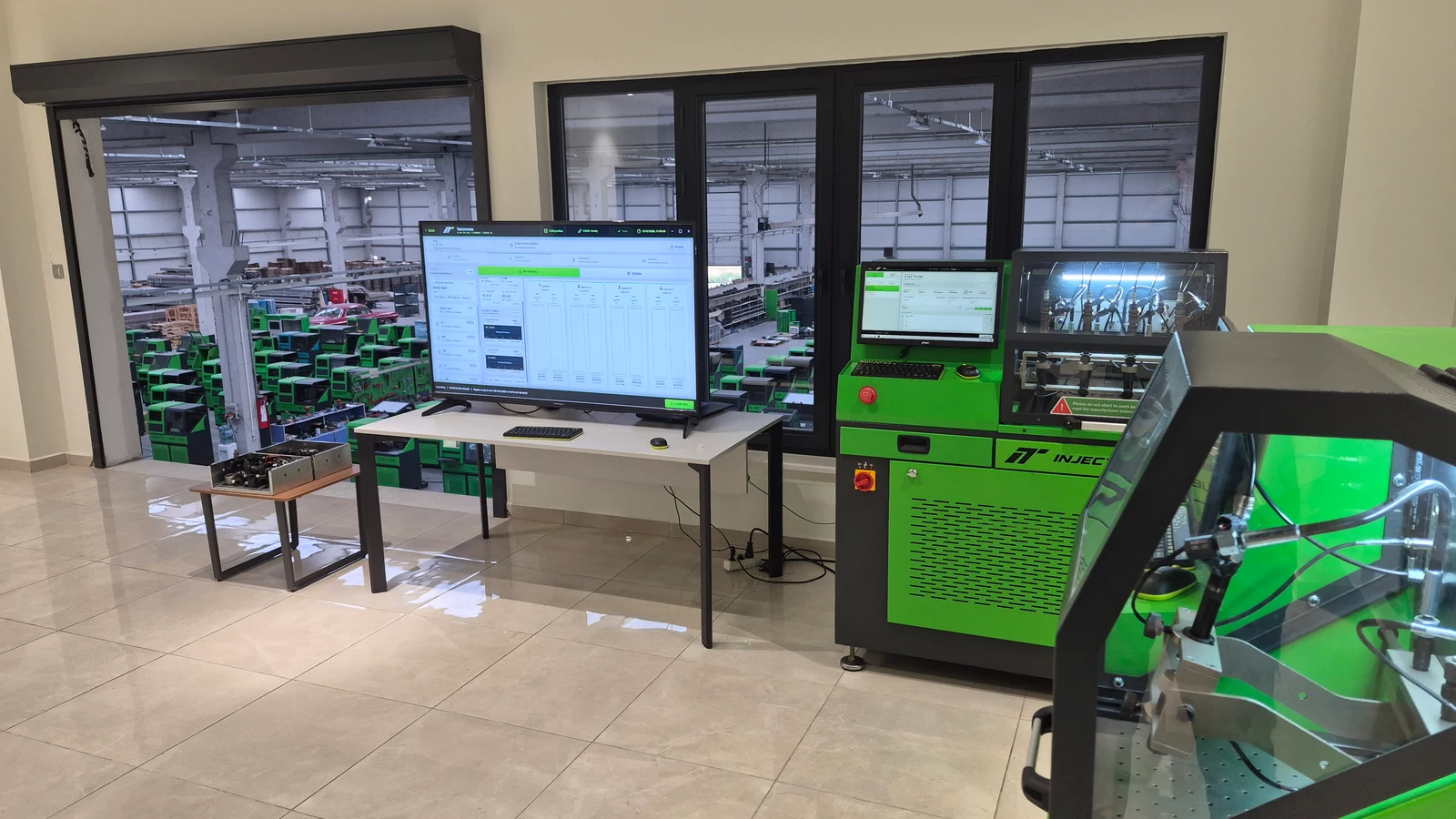
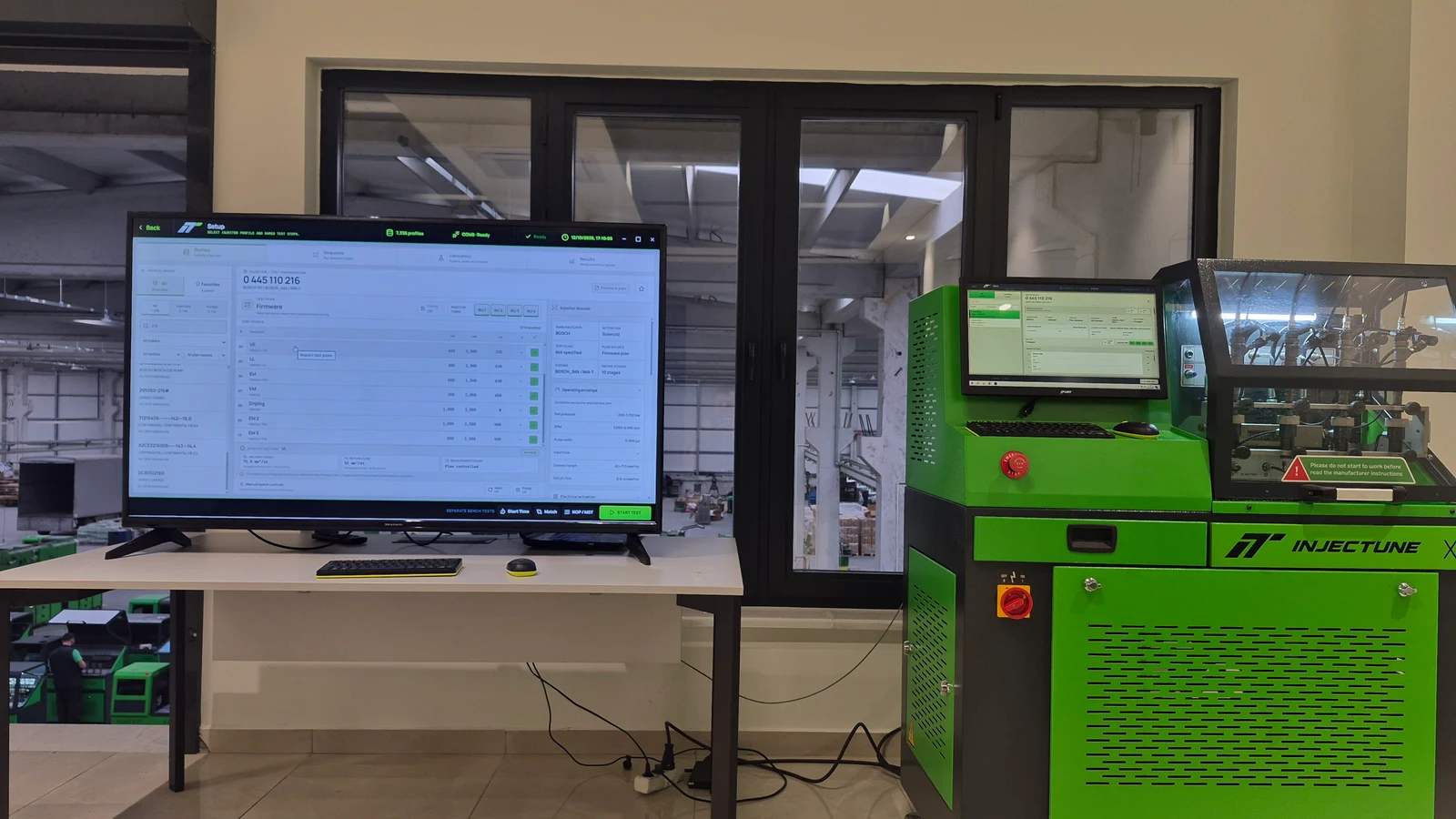
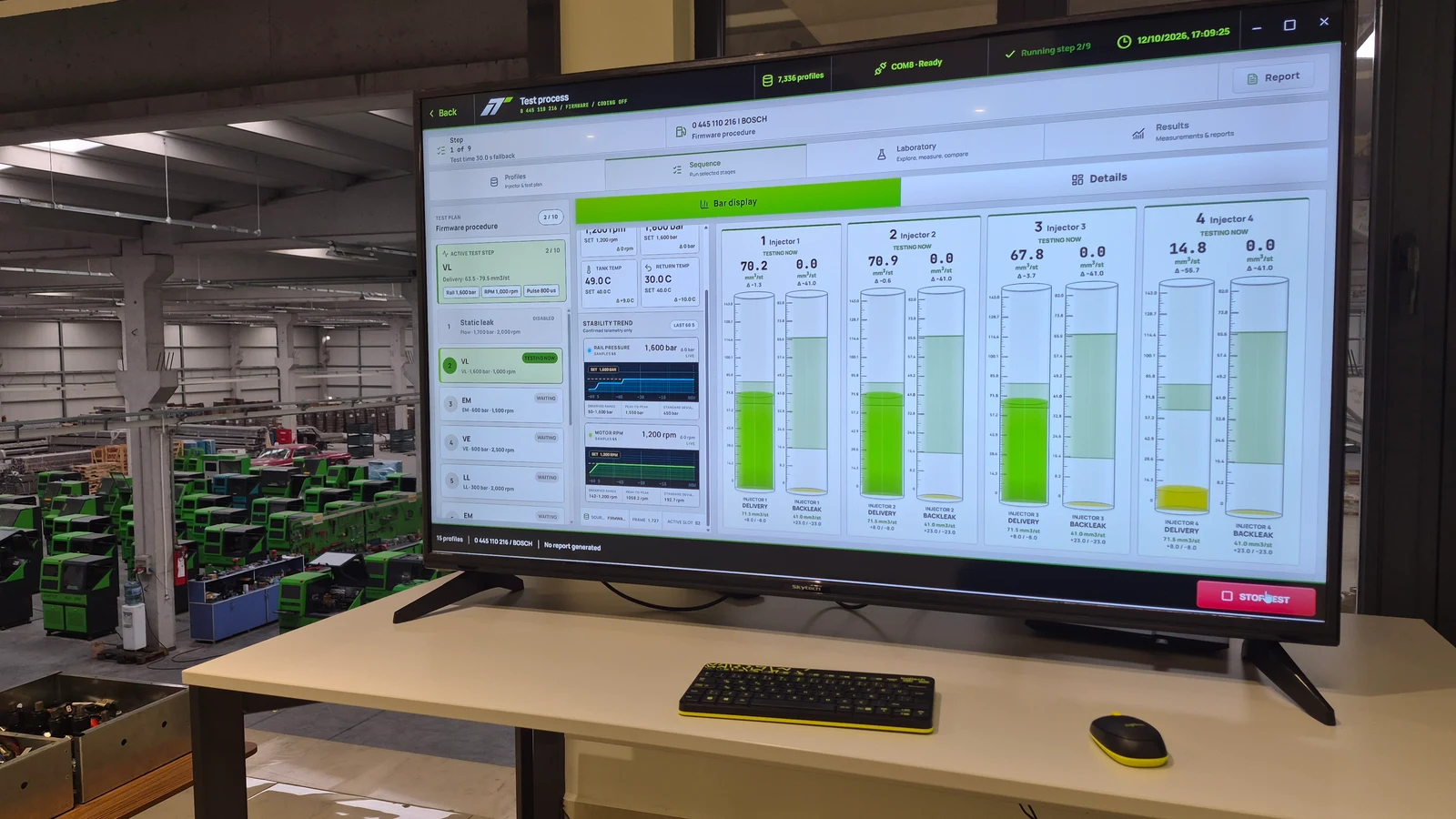
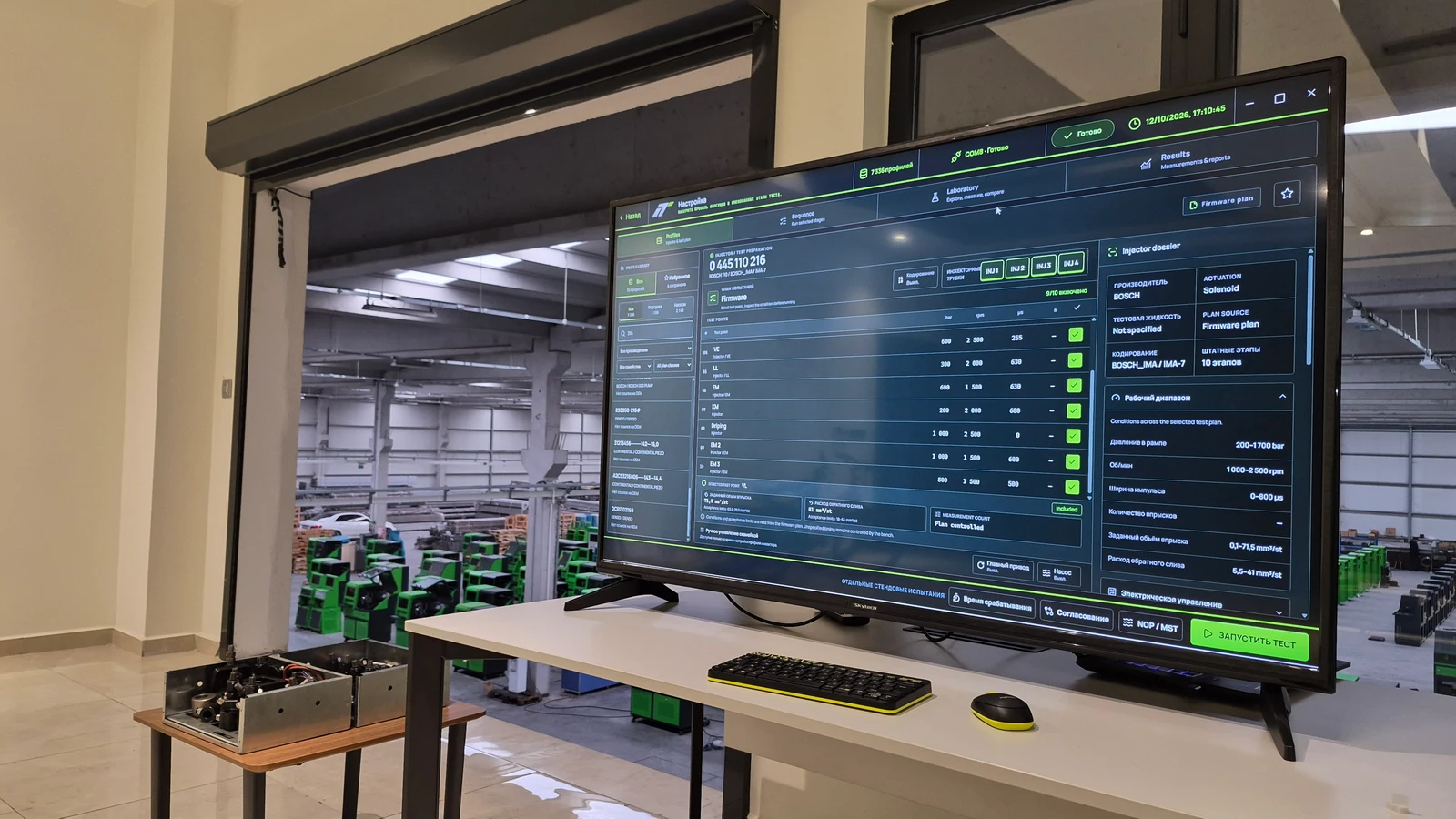
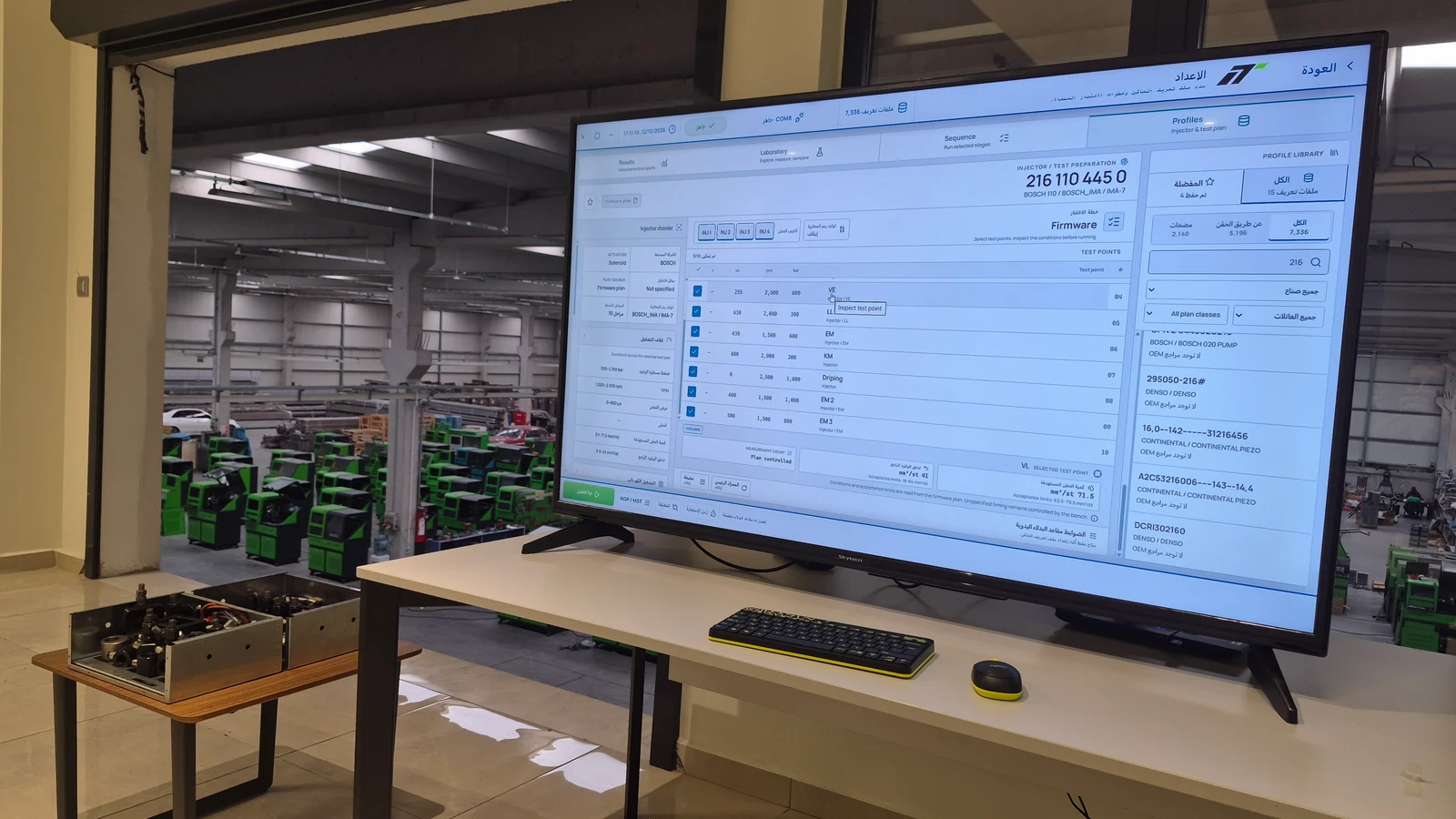
The Injectune screen in the opening photograph places the injector profile, test stages and application details together. This is the point to check that the selected procedure matches the physical injector and the work requested. Record any supported calibration output against that same injector identity, separately from the test measurements. Entering the appropriate code into the vehicle ECU remains a separate step in the vehicle service procedure.
What does an injector correction code do?
Two injectors of the same type can have different measured characteristics. A correction code lets engine management compensate for these differences. Another injector's individual code is therefore not a suitable substitute. Delphi: injector individuality.
Think of three separate records: the part number identifies the application, the serial number identifies the unit, and the correction code carries calibration information. Keeping all three in the job record helps prevent an identification number being entered into a calibration field.
Common diesel injector coding families
The names below describe manufacturer terminology. They do not establish that every injector from that manufacturer uses the same format or process.
| Manufacturer and code family | Meaning in the service workflow | What to verify |
|---|---|---|
| Bosch — IMA / IQA and IMA/ISA | Quantity correction through IMA/IQA; ISA is the separate voltage-adjustment concept for applicable piezo injectors. | The exact injector and supported procedure. Quantity terminology; IMA/IQA wording; ISA definition. |
| Delphi C2i / C3i / C4i | Different generations of correction coding. Delphi identifies C4i as a later correction method than C2i and C3i. | The correct generation and repair/calibration method, rather than choosing by vehicle age alone. Delphi C4i overview. |
| Continental / Siemens / VDO — IIC | Injector individual correction, associated with measured injection-quantity characteristics. | The injector reference and supported IIC test/coding procedure. Continental technical definition; VDO IIC program example. |
| DENSO QR / compensation ID | Calibration identification for applicable injectors; DENSO requires the printed ID to be registered. | Check the specific part's marking. DENSO replacement bulletin. |
Do not use a universal character-count chart as the final authority. Follow the exact vehicle and injector instructions. For more detail, see our Bosch IMA and ISA guide and DENSO QR code guide.
What does IIC mean for Continental/Siemens injectors?
Continental's published technical description expands IIC as injector individual correction and explains how quantity deviations measured on a test bench inform individual correction data. Use the applicable injector data to determine the required code format. Continental's IIC explanation.
Carbon Zapp's 2019 Continental/VDO announcement documents IIC coding within a specified common rail repair program, including injector control and software requirements. It describes that program's scope; it does not establish approval for every bench offering IIC. Carbon Zapp's VDO program.
Ask which supported routine applies to the actual Continental/Siemens/VDO injector, what calibration output it produces and which vehicle registration procedure follows. Keep that output with the individual injector's report.
How to find the code on a replacement injector
Start with the injector marking and supplied documents, following the identification guidance for that application. For example, DENSO locates the ID on the upper part of injectors covered by its replacement bulletin. DENSO ID registration guidance.
Photograph the full marking, retain the packaging and associate the record with the intended cylinder. If several numbers are present, use the manufacturer's identification guidance instead of selecting whichever string fits the diagnostic tool's input box.
There are exceptions: DENSO's 2026 regional bulletin lists particular aftermarket injectors supplied without individual QR calibration codes and with their own compensation method and instructions. Check the actual part. DENSO regional product bulletin.
How is a new injector calibration code generated?
For a repaired injector requiring recalibration, obtain the code through the supported procedure for that injector. In Delphi's published repair example, the unit undergoes a complete test after repair on authorized equipment. A new C2i/C3i code is then issued and attached to the injector, followed by registration in the vehicle. Delphi's repair and recalibration example.
A workshop should therefore ask for evidence of the completed calibration, not just a printed string. Request the injector identity, test date, applicable procedure, result and issued code together. Treat an unexplained code with no connection to the unit's measurement record as an unresolved documentation issue.
Equipment and software scope matter. Hartridge's CRi-Pro literature distinguishes its Delphi-authorized IRIS repair programs from its all-makes software. That distinction illustrates why a machine's ability to connect to an injector does not, by itself, establish a particular repair authorization. Hartridge CRi-Pro brochure.
Why a test report is not automatically a new code
A report records the tests performed and their results. A calibration code is a separate output of a supported coding process. Bosch's EPS 118 documentation provides a concrete example: the machine reports injector test results, but the brochure explicitly excludes IMA encoding. Bosch EPS 118 documentation.
Ask the workshop whether the supplied document is a diagnostic report, a calibration record, or both. For the underlying distinction, read injector test plans and coding profiles.
Registering the code in the correct ECU cylinder
Use the vehicle manufacturer's cylinder numbering and the appropriate diagnostic function. Do not infer cylinder order from where you are standing beside the engine. As a specific example, Delphi's Toyota D-4D procedure selects an injector position, confirms the entered code and displays the old and new values after successful programming. Delphi's Toyota programming example.
Follow the prescribed operating conditions and any required learning or adaptation procedure. DENSO notes that post-replacement diagnostic procedures differ between vehicle brands; skipping required coding can lead to running problems. A successful entry message should be followed by the specified functional checks. DENSO's replacement guidance.
Missing or rejected code: a workshop checklist
Before repeating the programming attempt, establish:
- Part identity: does the injector match the engine application and any approved supersession?
- Code identity: are you entering a calibration code, rather than a serial or part number?
- Traceability: can the supplier connect the code and calibration record to this unit?
- Cylinder assignment: does your job record match the physical installation and OE numbering?
- Tool coverage: is the selected engine/ECU variant correct, and does the tool support its registration function?
- Failure evidence: what exact message and fault codes appeared, and what checks does the applicable service procedure specify?
This checklist is an editorial diagnostic aid, not a replacement for the vehicle's service procedure. If the marking cannot be verified, resolve it with the supplier or diesel specialist rather than trying guessed characters.
Frequently asked questions
Can a part number or serial number generate the code?
Those identifiers cannot establish a new individual calibration without measurement data. Retrieving an existing record is a different operation. This follows from how injector codes are produced.
Can I reuse the old code after repair?
Do not assume so. Ask which code the completed calibration procedure validates or issues. Delphi's example specifically provides a new code after repair; a retained label alone is not evidence that the old value remains appropriate. Delphi recalibration example.
Does an accepted code prove the injector is healthy?
No. Code registration and mechanical diagnosis answer different questions. Follow the required final checks, including the return-flow checks identified in DENSO's replacement guidance.
Planning a testing and coding setup
Injectune Control lists Bosch IMA/ISA, Delphi C2i/C3i/C4i, DENSO QR and Continental/Siemens IIC among its supported coding workflows. Coverage depends on the installed database, software, configuration and fixtures. Start with your actual injector references in the injector database, review how to choose a diesel injector test bench, then discuss the required coverage.
Common rail work involves hazardous pressures. Testing, installation and repair should follow the applicable manufacturer procedures and equipment safety instructions, with appropriately trained personnel. Delphi's common rail safety warning.
Technical sources
- Delphi: common rail injector codes.
- Delphi: repair and C2i/C3i recalibration.
- Delphi: C4i technology.
- Delphi: Toyota D-4D code registration.
- Bosch: diesel equipment terminology, page 6; DCI 700 IMA/IQA reference.
- Bosch: ISA terminology; EPS 118 scope.
- DENSO: ID registration bulletin; replacement guidance; regional compensation-method exception.
- Hartridge: CRi-Pro software and repair-program scope.
- Continental: IIC technical description in patent US9002621B2; Carbon Zapp: Continental/VDO IIC program announcement, October 2019.
Put the knowledge to work.
Talk to our team about the injector applications and testing workflow for your workshop.
Discuss your configuration