
Injector testing in 2026: precision beyond maximum pressure
A practical diesel workshop guide to small injection quantities, temperature, return pressure, test-plan versions and repeatable injector measurements.

Injectune Editorial
6 min read
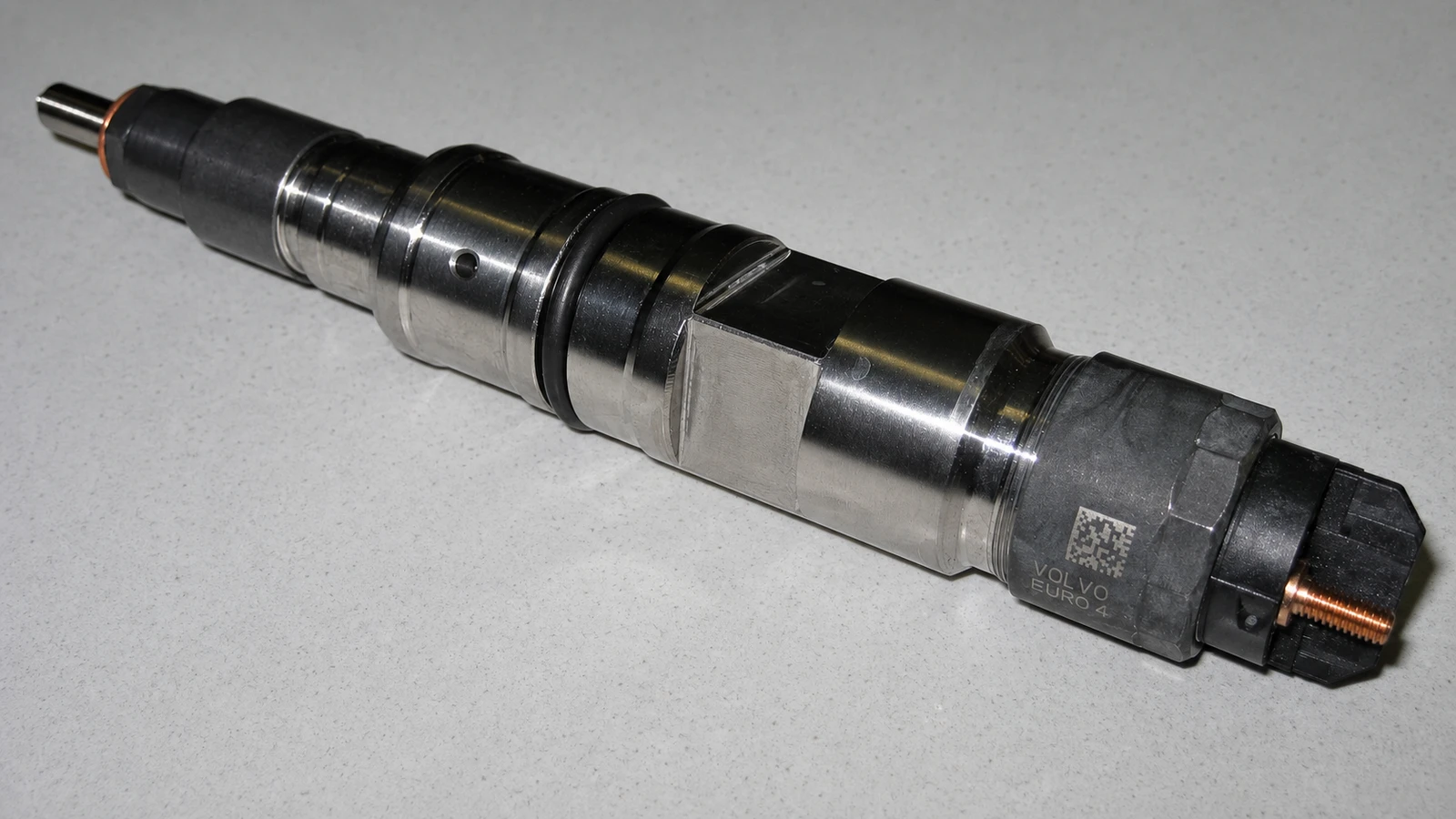
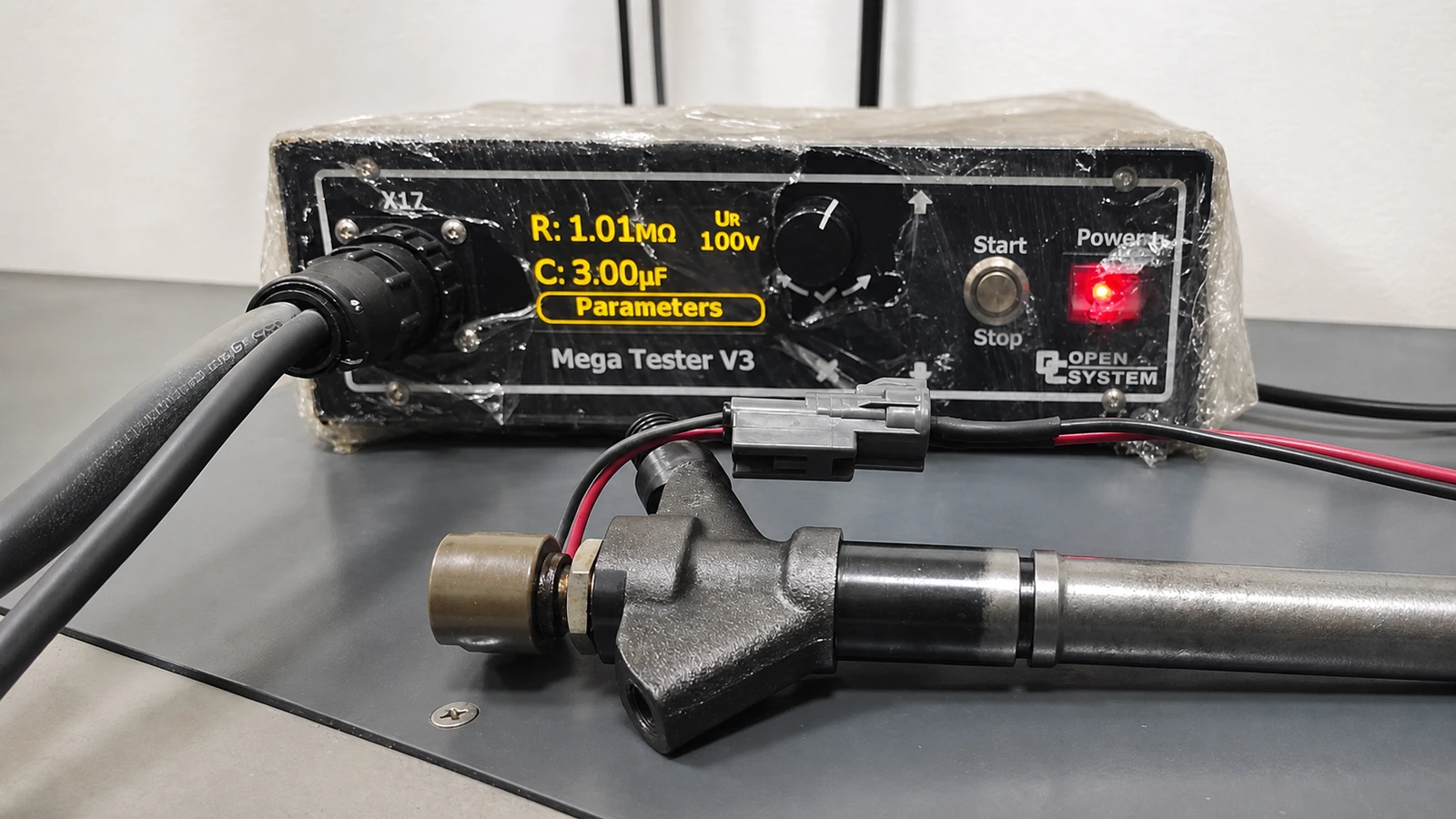
An injector passes in the morning and fails in the afternoon. Before deciding that the component has changed, establish whether the two measurements were comparable. For a diesel workshop planning its services in 2026, maximum pressure is only one part of the discussion. Recreating the conditions behind a result is equally important.
This article proposes a measurement workflow for existing common rail service work. Its checks describe workshop practice, rather than the equipment or injector coverage of a particular Injectune configuration.
What current test technology tells us
Bosch’s current DCI 700 documentation lists VCC/NCC coverage and configuration-dependent shot-to-shot measurement as distinct capabilities. Bosch technical brochure.
Our practical interpretation: connecting an injector does not establish that every required check is available. Mechanical adapters, electrical actuation, hydraulic conditions and valid test data must work together. These technologies did not all appear in 2026; they remain relevant to the service and equipment decisions being made today.
Small quantities deserve their own assessment
A successful main-injection test at high load does not establish that a small-quantity operating point will pass. Where the applicable plan includes pilot, idle or low-load steps, evaluate each against its own limits. One total-delivery value cannot describe the entire operating range.
Consider an illustrative example: two measurement sequences have the same average. In one sequence, individual values are close together; in the other, low and high values alternate. The averages match, but the behaviour does not. This is a mathematical illustration, not a measured customer result or an acceptance threshold.
A system without individual-shot measurement can still support comparison of complete test runs. That comparison must be described accurately: run-to-run repeatability and shot-to-shot variation are different measurements.
Four conditions worth recording
| Condition | Record with the job | First check when results drift |
|---|---|---|
| Test fluid and temperature | Fluid identity, measured temperature, conditioning time | Conditions stable before measurement |
| Rail and return pressure | Requested and measured values | Regulation, connections and return circuit |
| Electrical actuation | Injector type, connection and plan | Correct driver and connector combination |
| Measurement sequence | Channel, test order and repeat number | Systematic channel or warm-up effects |
Hartridge describes injector-body cooling as a way to reduce heat-related effects on test accuracy. Hartridge equipment documentation.
Our recommendation is to record conditioning and timing as well as tank temperature. Follow the relevant procedure for when measurement begins and what happens between repeats. There is no single temperature, pressure or waiting period suitable for every injector family.
A repeat procedure for borderline results
- Recheck the part number and the applicability of the test plan. A similar injector number is not a substitute for the correct acceptance data.
- Preserve the first report and explain why another run is needed. A failed measurement remains part of the evidence.
- Check connections, fluid and conditioning according to the equipment procedure. Confirm safe depressurisation before touching pressure connections.
- Repeat with the same plan. If a channel comparison is supported and justified, record it as a separate check.
- Assess consistency separately from compliance with the acceptance limits. A measuring system can produce consistently biased results.
- If the discrepancy remains unresolved, mark the conclusion as uncertain and investigate the measurement system. Selecting the most favourable repeat is not a diagnostic method.
The plan version belongs in the measurement record
A familiar plan name may conceal changed steps or limits after an update. Archive the plan identifier, version or update date, and software version. These records let the workshop distinguish a change in the injector from a change in the method used to assess it.
After updates, follow the equipment manufacturer’s verification process. Tracking a known reference component can help identify process drift, but it does not replace calibration of the measuring system. The reference component itself needs an identity and a recorded history.
A useful decision for the 2026 workshop
List the part numbers that actually arrive at your workshop. Against each, record the checks you can perform, the preparation required and any coverage gaps. Then track repeated jobs and unresolved measurement differences. This gives a more useful basis for investment than comparing maximum-pressure figures alone.
Use the injector test-report guide to structure the results, and the repair traceability guide to connect those results to the component’s service history.
Technical sources checked on 12 September 2026. The workflow recommendations are Injectune Editorial’s assessment; operating conditions must come from the applicable injector and equipment procedures.
Put the knowledge to work.
Talk to our team about the injector applications and testing workflow for your workshop.
Discuss your configuration